
Avon & West Indianapolis · Hendricks County
Free hearing test in Avon: what happens, and what it tells you.
Clarity. Confidence. Connection.™
A hearing evaluation at HearBest Avon takes about 60 to 90 minutes and costs nothing. The hearing test itself is one part of it — the rest is the conversation about your history and the time spent going through what the results mean. Together they measure how well you understand speech — not just whether you hear tones. You leave with your own audiogram and a plain explanation of what it shows, whether or not you need hearing aids.
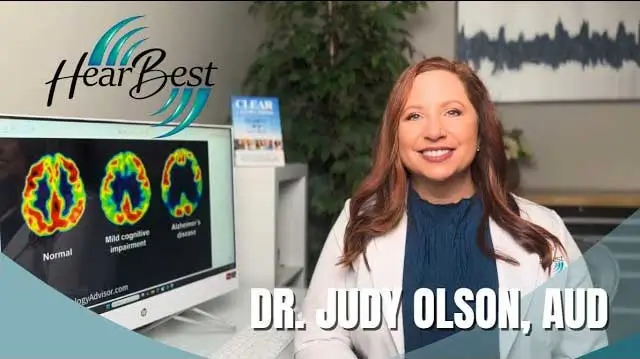
▶ Watch Dr. Judy’s welcome message — 90 seconds
Walk-in hearing aid service — cleaning, wax guards, domes and charger trouble on clinic days. Let us know you’re coming through the scheduler.
What is a hearing test, exactly?
A hearing test measures the quietest sounds you can hear at each pitch and how accurately you understand speech, including speech with background noise behind it. It is painless, takes about 30 minutes, and produces a chart called an audiogram. The test sits inside a hearing evaluation — the full 60-to-90-minute appointment that also covers your history, an ear examination and a results consultation.
It is not a screening. A screening — including our own online hearing screening — is a quick check that tells you whether to look further, and it is a sensible first step. A full evaluation tells you which pitches you are missing, in which ear, by how much, and whether the cause sits in the outer, middle or inner ear — conductive, sensorineural or mixed — which is what decides whether the answer is hearing aids, a medical referral, or simply removing wax.
That distinction matters, because the most common complaint we hear is not that the world has gone quiet. It is “I can hear people talking, I just can’t make out the words” — usually in restaurants. That is a speech-clarity problem, and it is invisible to a test that only plays tones.
What each part of the test measures
| Test | What happens | What it shows |
|---|---|---|
| Pure tone audiometry | You wear headphones and press a button each time you hear a beep, across pitches from low to high. | The softest volume you can detect at each frequency — the shape of your hearing loss. |
| Speech & word recognition | You repeat back words at a comfortable listening volume. | How much of speech your brain actually resolves, which the tones alone do not always predict. |
| Speech-in-noise | The same task with background chatter added. | Why restaurants and family gatherings are hard. This is the test that explains the complaint most people arrive with. |
| Bone conduction | A small vibrating device rests behind your ear, bypassing the ear canal. | Whether the problem is in the inner ear and nerve, or blocked earlier by wax, fluid or a middle-ear issue. |
| Ear health examination | A lighted scope looks into the canal and at the eardrum. | Wax blockage, fluid, perforation, or anything that needs a physician rather than a hearing aid. |
What happens at a hearing test, start to finish.
You talk through where hearing is hard, have your ears examined, complete about 30 minutes of testing, then sit down with your results on screen. The evaluation runs about 60 to 90 minutes in all, and nothing is fitted or sold that day unless you ask for it.
- Where you struggle — car, TV, church, groups
- Ringing, dizziness, ear pain, family history
- Noise exposure at work or from hobbies
- Lighted scope check of canal and eardrum
- Wax, fluid or blockage ruled in or out
- Sometimes the appointment ends happily here
- Tones, words, and words in background noise
- Bone conduction to locate the cause
- About 30 minutes, nothing uncomfortable
- Your audiogram on screen, walked through
- Which pitches, which ear, how much
- Tied back to the situations you described
- Options in plain terms, including doing nothing
- What it would cost, before you decide
- A baseline on file if your hearing is fine
No cost • No obligation • You will not be fitted the same day unless you want to be
How do you read hearing test results?
An audiogram plots pitch along the bottom, from low to high, and loudness down the side in decibels. The closer your marks sit to the top of the chart, the softer the sounds you can hear. Normal hearing for an adult sits between −10 and 15 dB. Clinically, hearing loss is usually defined as an average above 25 dB across the speech frequencies, so the 16–25 dB band in between is classed as slight — soft speech starts to slip, but most people notice nothing.
Most age-related loss shows up on the right-hand side of the chart first — the high pitches. That matters more than it sounds, because consonants like s, f, th, sh and t live up there while vowels are low-pitched. Lose the high frequencies and speech does not get quieter, it gets mushy. That is the mechanism behind “I can hear you, I just can’t understand you.”
| Range | Degree | What it tends to feel like |
|---|---|---|
| −10 to 15 dB | Normal | No difficulty, including in background noise. |
| 16 to 25 dB | Slight | Soft speech and distant voices start to slip; most people notice nothing. |
| 26 to 40 dB | Mild | Soft speech and children’s voices are hard; restaurants are tiring. |
| 41 to 55 dB | Moderate | Ordinary conversation takes effort; the TV goes up; you ask people to repeat. |
| 56 to 70 dB | Moderately severe | Group conversation is largely lost without help. |
| 71 to 90 dB | Severe | Only loud speech close by is audible. |
| 91 dB and above | Profound | Speech is not usable through hearing alone. |
There is a fuller walkthrough of a real patient’s audiogram — why someone can hear a dog barking but not a bird chirping — on our hearing tests page. Two people with identical audiograms can have very different experiences, which is why word recognition and speech-in-noise scores are part of the evaluation. They measure what the brain does with the signal rather than what reaches the ear, and they predict how much difference hearing aids will make better than the tones do.
How much does a hearing test cost in Avon?
At HearBest Avon the hearing evaluation and the consultation about your results are free — no obligation, and nothing to sign. There is no charge for the testing or for the explanation of what it found. If the evaluation shows hearing loss, we walk you through what it means and what your options are. Costs only begin if you decide to move forward with treatment.
If you are comparing clinics, it is worth knowing what “free” covers elsewhere. A free screening is a handful of tones and a pass-or-fail answer. What is described on this page — full audiometry, speech-in-noise, bone conduction, ear health examination and a results consultation — is the diagnostic version, and it is what you get here at no cost.
Insurance comes up constantly, so plainly: many plans include some hearing aid benefit, and we check your benefits and explain the coverage before any treatment begins. If a medical diagnosis is involved — sudden loss in one ear, say, or dizziness — billing can work differently, and you will be told before anything is billed.
Bring your insurance card anyway. Even though the evaluation is free, having the card on hand means we can tell you what your plan would contribute if you do decide on hearing aids, rather than guessing and following up a week later.
When should you get your hearing tested?
Get tested if you turn the TV up louder than others prefer, ask people to repeat themselves, struggle in restaurants or groups, hear ringing in your ears, or find conversation tiring. A baseline test around age 40 is also worth having, so later changes can be compared against it, and testing makes sense for anyone with years of loud noise exposure before symptoms are obvious.
- People seem to mumble — especially women and children, whose voices carry more high-frequency information.
- Restaurants have become hard work. You can hear the room but not the person across the table.
- The TV volume is a household negotiation.
- You hear ringing, buzzing or hissing that others do not. Tinnitus often arrives alongside hearing loss, and the evaluation is the first step either way.
- One ear is noticeably worse than the other, or hearing dropped suddenly. A sudden one-sided change deserves prompt attention rather than wait-and-see.
- You worked around noise — factory floors, farm equipment, engines, firearms, music. Noise damage accumulates quietly over years.
- Conversation leaves you exhausted. Straining to follow speech takes real mental effort, and that fatigue is often the first thing people actually notice.
There is also a reason not to wait that has nothing to do with convenience. The 2024 Lancet Commission on dementia lists hearing loss among 14 modifiable risk factors that together account for up to 45% of dementia cases worldwide, with hearing loss alone at about 7%. That figure describes risk across a whole population, not any one person’s odds — and it does not mean hearing loss causes dementia.
What a hearing test can do is give you the choice. The largest trial of the question so far, ACHIEVE (2023), found no overall slowing of cognitive decline from treating hearing loss across its full group — but in the subgroup already at higher risk of decline, three years of hearing treatment cut the rate of decline by 48%. The researchers’ own conclusion is the sensible one to act on: have your hearing checked regularly, and address what the test finds.
How should you prepare for a hearing test?
Bring your insurance card, a list of your medications, and if you can, the person you most often struggle to hear. Do not try to clear wax yourself beforehand, and avoid loud noise for a few hours before the appointment. Allow 60 to 90 minutes for the full evaluation.
- Bring someone who knows your hearing — a spouse, an adult child, a friend. They notice what you have adapted to, and they give us a familiar voice for the speech testing.
- Bring a medication list. Some medications affect hearing and balance, and it changes what we look for.
- Leave the cotton swabs alone. If there is wax we would rather see it and remove it safely than find a canal that has been packed down further.
- Skip the loud morning. A few hours away from mowers, power tools or loud music means we measure your hearing rather than a temporary shift.
- Bring current hearing aids if you wear any, even old ones from elsewhere. We can read what they are set to do and whether they are still doing it.
- Write down your three hardest situations before you come. It is the single most useful thing you can bring.
What happens if the test shows hearing loss?
You are told what kind of loss it is, what would help, and what each option involves — including doing nothing for now. If hearing aids make sense you can compare brands and price ranges and take time to decide. If the cause looks medical, you get a referral rather than a sales pitch.
Not every result leads to hearing aids. Wax removal, treatment for middle-ear fluid, or a referral to an ENT physician are all ordinary outcomes. Where hearing aids are the right answer, the Avon clinic fits all five major manufacturers — Oticon, Phonak, Signia, Starkey and Widex — which matters, because the best fit depends on your audiogram, your lifestyle and your budget rather than on which brand a clinic happens to stock.
If tinnitus is part of the picture it is addressed on its own terms; see tinnitus treatment for what that involves. And if you already wear hearing aids that are not working the way you hoped, a second opinion is a perfectly normal reason to book — bring them with you.
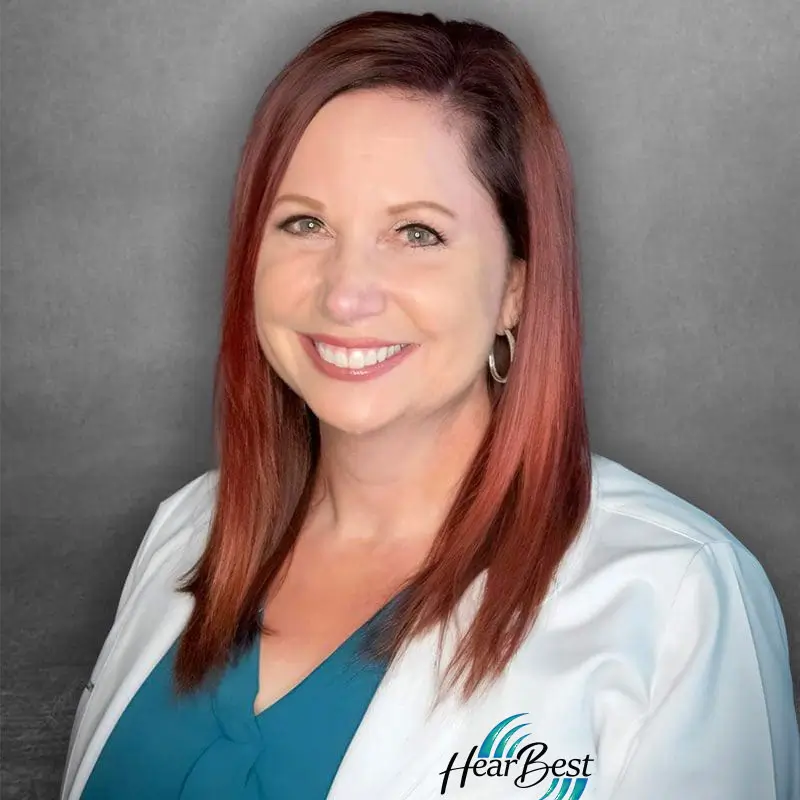
Dr. Judy Olson, Au.D. knows hearing loss personally.
Chief Audiologist and owner — and a hearing aid wearer herself for over 25 years. That experience shaped how every HearBest patient is treated, and it sets the clinical standard the whole Avon team works to.
- Audiologist-led team — recommendations guided by clinical expertise, not sales
- Diagnostic, not a screening — the full evaluation described on this page, at no cost
- All five major brands fitted — so the recommendation follows your audiogram
“Treating your hearing isn’t just about sound — it’s about protecting your brain, your relationships, and your independence.”— Dr. Judy Olson
Clinically reviewed by Dr. Judy Olson, Au.D. This page describes the standard adult evaluation at the Avon clinic; your own appointment may include further testing depending on your history and symptoms. Last reviewed 30 October 2026.
Book a Free Hearing Test at AvonMeet the rest of your care team
Dr. Judy is joined in Avon by Audiologist Dr. Elizabeth Teets and Lauran Gady.
All HearBest professionals are trained in the HearBest Optimization Method™ by audiologist Dr. Judy Olson, ensuring personalized hearing care at every HearBest clinic in Indiana. It is the framework our team follows to deliver personalized, evidence-based care from the first appointment through long-term support: comprehensive evaluation, personalized treatment planning, precision fitting and optimization, and ongoing care.

A proud Butler alum, back in Indianapolis after studying audiology at Ohio University. She honed her skills at the Cincinnati VA and a Dayton ENT clinic — expect clear communication, compassionate care, and a passion for helping you rediscover the beauty of sound.
Schedule a Visit in Avon
An Indiana-licensed specialist providing friendly, expert care — from hearing device fittings and fine-tuning to everyday maintenance and support.
Schedule a Visit in AvonReal patients. Real results.
Verified Google reviews from patients at our Avon clinic.
 Polly’s storyHearBest patient · in their own words
 David’s storyHearBest patient · in their own words
 Michelle’s storyHearBest patient · in their own words
Patient video stories, shared with their permission. Google reviews below.
Across all HearBest clinics in Indiana, patients have left us more than 1,500 reviews. See reviews from every clinic
Easy to find. Easy to park. Easy to hear better.
Our clinic sits in Raceway Commons, just off US-36 at 55 S Raceway Rd on the west side of Indianapolis — about ten minutes from downtown Avon, fifteen from Brownsburg or Plainfield, and twenty from Danville. Ground floor, free parking at the door, wheelchair accessible. You do not need to drive into Indianapolis for a full diagnostic hearing test. Open appointment times are shown as you book — or call (317) 799-1456.
55 S Raceway Rd Ste 900, Indianapolis, IN 46231
- Monday9:00 AM – 5:00 PM
- TuesdayClosed
- Wednesday9:00 AM – 5:00 PM
- ThursdayClosed
- Friday9:00 AM – 5:00 PM
- SaturdayClosed
- SundayClosed
Hours, address & reviews from Google
Hearing test questions, answered.
The questions patients ask most before booking a first appointment.
Where is the Avon hearing clinic, and is parking easy?
We are at 55 S Raceway Rd, Suite 900, in Raceway Commons just off US-36 on the west side of Indianapolis — Yummy Bowl and Dental Solutions of Avon are next door, Meijer is across the street. Ground floor, free parking at the door, wheelchair accessible. It is roughly ten minutes from downtown Avon and fifteen from Brownsburg or Plainfield.
Is there an audiologist in Avon, Indiana?
Yes. HearBest Avon is led by Dr. Judy Olson, Au.D., Chief Audiologist and owner, with Audiologist Dr. Elizabeth Teets, Au.D. and Indiana-licensed hearing instrument specialist Lauran Gady. Your diagnostic hearing evaluation is performed at the Raceway Commons clinic — you do not need a referral, and you do not need to travel into Indianapolis for it.
Do I have to drive into Indianapolis for a diagnostic hearing test?
No. The Avon clinic performs the full diagnostic evaluation described on this page — pure tone audiometry, word recognition, speech-in-noise, bone conduction and an ear health examination — not a screening you then have to follow up somewhere else. If something turns up that needs a physician, we refer you; everything else is handled here.
Is the hearing test really free?
Yes. The evaluation and the consultation about your results are free at HearBest Avon, with no obligation. You are not required to buy anything, and there is no charge if you decide to do nothing.
How long does a hearing test take?
The hearing test itself takes about 30 minutes. The full hearing evaluation — history, ear examination, testing and a results consultation — runs about 60 to 90 minutes at a first appointment. Follow-up visits are shorter.
Is a hearing test the same as a hearing evaluation?
Not quite. The hearing test is the measurement part — tones, words, words in noise and bone conduction, about 30 minutes. The hearing evaluation is the whole appointment: your history, an ear examination, the test itself, and a consultation where the results are explained. At HearBest Avon the full evaluation takes about 60 to 90 minutes and is free.
Does a hearing test hurt?
No. You wear headphones and press a button when you hear a tone, and repeat words back. The bone conduction device rests behind the ear and vibrates gently. Nothing sharp goes into the ear and nothing is uncomfortable.
Do I need a referral from my doctor?
No. You can book a hearing test at HearBest Avon directly. Some insurance plans ask for a referral before they will contribute toward hearing aids, which is a separate question we can check for you.
What is the difference between a hearing screening and a hearing test?
A screening is a quick pass or fail at a few pitches — useful as a first step, and we offer one online. A full diagnostic test measures every speech frequency in each ear, checks word recognition with and without background noise, and identifies where in the ear the problem sits.
Can earwax cause hearing loss?
Yes, and more often than people expect. Impacted wax can muffle hearing noticeably, and sometimes removing it resolves the complaint entirely. We check for it at the start of every appointment, so do not try to clear it yourself beforehand.
Will I be pressured to buy hearing aids?
No. A first appointment is diagnostic. If your hearing is fine we say so, and you leave with a baseline on file. If there is loss you get your options and the time to think about them; fittings are normally a separate visit.
How often should I have my hearing tested?
Set a baseline around age 40, then every one to two years from about 60 — annually if you already wear hearing aids or work around loud noise, and whenever something changes: new ringing, a drop in one ear, or more difficulty than you remember.
Can you test my hearing if I already wear hearing aids from somewhere else?
Yes, and it is a common reason people come in. Bring the hearing aids with you. We can test your current hearing, read how the aids are programmed, and tell you whether they are set correctly for your loss.
Does insurance cover a hearing test?
The evaluation at HearBest Avon is free regardless of your insurance. Where insurance matters is hearing aids: many plans include some benefit, and we check and explain your coverage before any treatment begins. Bring your card.
At what age should children have their hearing tested?
Newborns are screened at birth and school-age children are usually screened at school. If your child is struggling to follow speech, falling behind in class or turning the volume up, call us at (765) 771-7109 and our team will arrange the right appointment — pediatric diagnostic testing uses different equipment and protocols from adult evaluations.
What should I bring to my hearing test?
Your insurance card, a list of your medications, any current hearing aids, and ideally the person you most often have trouble hearing. Writing down the three situations where hearing is hardest is the most useful preparation you can do.
Where the clinical figures on this page come from
- American Speech-Language-Hearing Association. Degree of Hearing Loss (classification after Clark, J. G., 1981) — the dB ranges in the results table.
- National Institute on Deafness and Other Communication Disorders. Hearing Loss Increases With Age — hearing loss defined as a four-frequency speech average above 25 dB HL.
- Livingston G, et al. Dementia prevention, intervention, and care: 2024 report of the Lancet standing Commission. The Lancet 2024;404(10452):572–628 — the 45% and 7% figures.
- Lin FR, et al. Hearing intervention versus health education control to reduce cognitive decline in older adults with hearing loss in the USA (ACHIEVE): a multicentre, randomised controlled trial. The Lancet 2023 — the 48% subgroup result.
Appointment times, test components and costs describe the Avon clinic specifically and are confirmed by the clinical team. Everything else on this page is general patient information and is not a diagnosis.
We’ll walk you through your results
Our audiologists will discuss your hearing test results with you during the appointment, and you leave with your own copy of the audiogram. If you have questions afterwards — or you would like us to look over results from another clinic — call HearBest Avon at (317) 799-1456. We are always available to review your hearing test results with you.
Schedule Your Hearing Test